

Tin tức
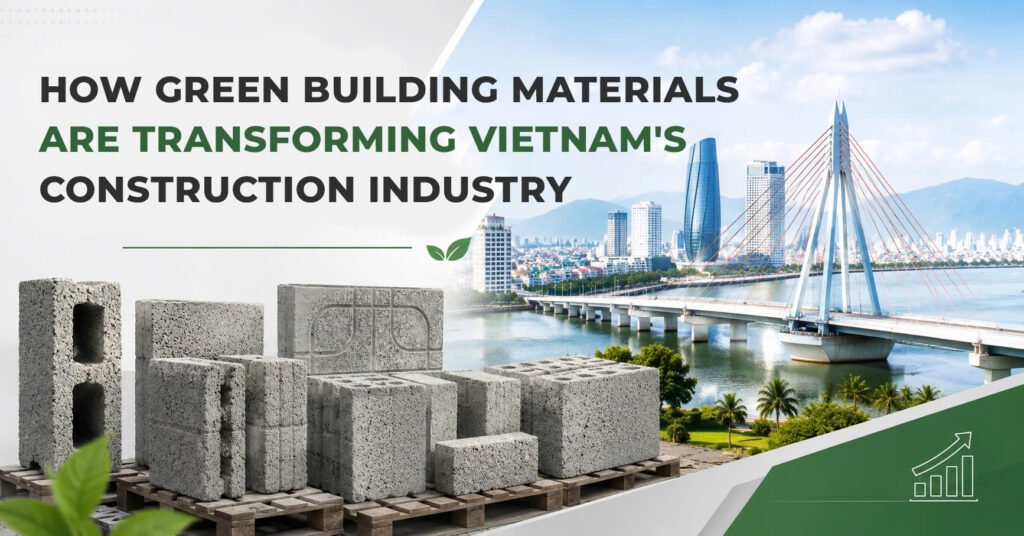
How Green Building Materials Are Transforming Vietnam’s Construction Industry 2026
Global demand for sustainable construction has shifted from a niche preference to a mainstream expectation over the past decade. Developers, architects, and investors across the world are increasingly prioritizing environmental performance alongside cost and durability when selecting materials for new projects. Vietnam, with its rapid infrastructure development, is no exception to this trend — and in many ways, the country is emerging as an interesting case study in how a fast-growing construction market can integrate sustainability into its core supply chain.
Over the past several years, the growing role of environmentally friendly green building materials has become increasingly visible across Vietnamese cities and industrial zones. From residential developments to large-scale infrastructure projects, materials once considered alternative are now becoming standard specifications. Among these, non-fired bricks are becoming a preferred solution for a wide range of applications, offering a combination of structural performance, cost efficiency, and reduced environmental impact that traditional fired clay bricks struggle to match.
This article explores why green building materials are gaining momentum in Vietnam, why non-fired bricks in particular are leading this transition, and what international buyers, developers, and construction professionals should understand about this evolving market.
Why Green Building Materials Are Becoming the New Industry Standard
Climate Change and Carbon Reduction
The construction sector remains one of the largest contributors to global carbon emissions, both through material production and building operation. As countries commit to emissions reduction targets, the materials used in construction are coming under closer scrutiny. Manufacturing processes that consume less energy and produce fewer emissions are no longer just a marketing advantage — they are becoming a baseline expectation for responsible development. This shift is particularly relevant for fast-growing markets like Vietnam, where construction activity is expanding rapidly alongside broader national commitments to reduce emissions across major industries.
Sustainable Urban Development
As cities across Southeast Asia continue to expand, urban planners and developers are placing greater emphasis on sustainable development models that balance growth with resource efficiency. This includes not only energy-efficient building design but also the selection of materials that reduce the overall environmental footprint of construction, from sourcing through to end-of-life disposal. Material choice, once treated as a secondary consideration behind design and structural engineering, is increasingly recognized as a core component of any credible sustainability strategy for new developments.
ESG Requirements
Environmental, Social, and Governance (ESG) considerations have moved from the periphery of corporate strategy to a central concern for many construction companies and property developers, particularly those seeking international financing or partnerships. Material sourcing decisions increasingly factor into ESG reporting, making the choice of building materials a matter of corporate accountability rather than simply project-level preference. For companies operating across multiple markets, standardizing on materials with clear environmental credentials also simplifies reporting and reduces reputational risk tied to supply chain transparency.
Government Policies Encouraging Green Construction
Vietnam has introduced various policies aimed at reducing reliance on traditional fired clay brick production, which consumes significant clay resources and fuel for kiln firing. These policies, combined with growing market demand, are creating favorable conditions for manufacturers and suppliers of alternative, more sustainable materials to expand their presence in the domestic market.
Why Non-Fired Bricks Are Leading This Transition
What Are Non-Fired Bricks?
Non-fired bricks, also referred to as unfired or pressed concrete bricks, are manufactured from a mixture of cement, aggregates (such as crushed stone, sand, or industrial by-products like fly ash), and additives. Unlike traditional clay bricks, they are formed under high hydraulic or vibration pressure and gain strength through a natural curing process rather than kiln firing.
Manufacturing Process
The production process typically involves mixing raw materials in precise ratios, pressing them into molds under controlled pressure, and curing the finished units under regulated temperature and humidity conditions. This process allows for tighter quality control and more consistent output compared to traditional clay brick production, which depends heavily on kiln temperature and raw material variability.
Environmental Benefits
Because non-fired bricks skip the high-temperature firing stage entirely, their production consumes significantly less fuel and generates lower emissions compared to conventional clay bricks. Additionally, many manufacturers incorporate industrial by-products into their aggregate mix, helping to reduce landfill waste while also lowering pressure on natural clay extraction — a resource that has become increasingly scarce in several regions of Vietnam due to decades of intensive brick production.
Structural Performance
Beyond their environmental credentials, non-fired bricks offer strong technical performance. Units produced under consistent pressing conditions tend to have more uniform compressive strength and dimensional accuracy than clay bricks, which can vary depending on kiln conditions. This consistency translates into more predictable structural performance and often faster, more efficient construction on site.
For developers and contractors evaluating suppliers, understanding the production standards behind a non-fired brick manufacturing plant is an important first step — production capacity, quality control processes, and technical certifications all directly influence the reliability of the materials that eventually reach a construction site.
Central Vietnam: A Fast-Growing Market for Sustainable Construction
Quang Nam Province
Quang Nam has emerged as one of the more dynamic construction markets in Central Vietnam, driven by industrial expansion and infrastructure investment. As demand for sustainable materials grows across the province, non-fired bricks in Quang Nam have become an increasingly common specification for both residential and industrial projects, reflecting the broader shift away from traditional fired clay products.
Da Nang City
As one of Vietnam’s fastest-developing coastal cities, Da Nang presents a construction market with particularly high expectations around material quality, given its concentration of commercial buildings, hotels, and high-rise developments. This has created strong demand for materials that combine structural reliability with faster construction timelines.
Industrial Development
Both provinces have seen substantial growth in industrial zones over recent years, generating demand for large volumes of construction materials capable of supporting warehouses, factories, and logistics facilities. These projects typically require suppliers with sufficient production capacity to meet tight delivery schedules without compromising on consistency.
Infrastructure Expansion
Beyond industrial and commercial development, ongoing infrastructure projects — including transportation networks and public facilities — are contributing to sustained demand for construction materials across the region, reinforcing Central Vietnam’s position as a market worth watching for suppliers and international buyers alike.
Choosing Reliable Building Material Suppliers
Manufacturing Capacity
For projects of any significant scale, verifying a supplier’s actual production capacity is essential. Buyers should look beyond marketing claims and request concrete data on daily or monthly output, as well as any capacity reserved for existing long-term contracts that might affect availability. This is particularly important for international buyers unfamiliar with the local market, where production capabilities can vary significantly between manufacturers despite similar marketing presentations.
Product Quality Certification
Reliable suppliers should be able to provide documentation confirming compliance with relevant national or international standards, including compressive strength test results and quality certifications. This documentation provides an objective basis for evaluating material quality before it is incorporated into a project, and is often a requirement for projects involving public funding or international financing partners.
Stable Supply Chain
Beyond production capacity, the reliability of a supplier’s broader supply chain — including raw material sourcing, transportation logistics, and inventory management — plays a significant role in ensuring consistent delivery throughout a project’s construction timeline. Buyers evaluating long-term partnerships should consider not only current output but also a supplier’s ability to scale production in response to growing demand, particularly for multi-phase developments spanning several years.
Technical Support
Suppliers that offer technical guidance, including recommendations on material selection for specific structural applications, add meaningful value beyond the product itself. This is particularly important for international buyers who may be less familiar with local construction practices and material standards, and who benefit from working with suppliers capable of bridging technical and regulatory differences between markets.
Proven Applications in Large-Scale Construction Projects
Infrastructure Projects
Infrastructure developments typically involve strict material specifications and demanding delivery schedules, making them a strong indicator of a manufacturer’s genuine production and logistics capabilities when successfully completed.
Educational Facilities
School construction projects generally require materials that meet rigorous safety and durability standards, along with delivery timelines tied closely to academic calendars, adding another layer of complexity that tests a supplier’s reliability.
Healthcare Buildings
Hospitals and healthcare facilities impose similarly strict requirements, particularly around acoustic and thermal performance in patient care areas, making material consistency especially important in these applications.
Industrial Developments
Large industrial facilities often require substantial material volumes delivered on compressed timelines, providing a clear test of a manufacturer’s capacity to scale production without sacrificing quality.
Reviewing completed projects offers a practical way to assess a supplier’s real-world capabilities beyond product catalogs. One relevant example is the documented non-fired brick projects in Chu Lai, which illustrates the kind of large-scale supply capacity and delivery performance that project owners and procurement teams often look for when evaluating potential material suppliers for demanding construction schedules.
Selecting the Right Brick for Different Construction Applications
Residential Buildings
For residential construction, lighter-weight non-fired bricks with good thermal and acoustic properties are often preferred, helping reduce structural load while maintaining comfortable indoor conditions.
Commercial Buildings
Commercial developments frequently prioritize a balance between structural strength and construction speed, given the pressure to bring projects to market quickly and begin generating revenue.
Industrial Factories
Factory and warehouse construction typically calls for higher-strength materials capable of supporting heavier structural loads, along with the ability to source large volumes efficiently.
Public Infrastructure
Public infrastructure projects often require standardized, certified materials with well-documented performance characteristics, given the accountability requirements typically attached to publicly funded construction.
Among the range of available products, a concrete hollow block is commonly specified for load-bearing applications where higher compressive strength is required, making it a practical reference point when comparing technical specifications across suppliers.
Key Factors That Affect Construction Material Costs
Material Specifications
Different brick types and grades carry different production costs, depending on raw material composition and manufacturing complexity. Understanding these specifications helps buyers make accurate cost comparisons rather than evaluating suppliers on price alone.
Transportation Costs
Given the weight of concrete-based building materials, transportation costs can represent a substantial portion of total material expenses, particularly for projects located far from manufacturing facilities. Sourcing from suppliers with production sites closer to the project location can meaningfully reduce this cost component.
Project Scale
Order volume typically affects pricing, with larger orders often qualifying for more favorable terms due to production and logistics efficiencies. This makes early volume planning a useful tool for managing overall project material costs.
Market Fluctuations
Raw material costs, particularly cement, can fluctuate based on broader market conditions. For projects with extended timelines, staying informed about current concrete block price trends can support more accurate budgeting and help avoid unexpected cost overruns during later project phases.
The Future of Green Construction in Vietnam
Net Zero Initiatives
As Vietnam works toward its broader climate commitments, the construction sector is likely to face increasing pressure to adopt materials and practices aligned with Net Zero objectives, further accelerating demand for lower-carbon alternatives to traditional building materials.
Sustainable Urban Development
Continued urban expansion across Vietnam’s major cities and provinces will likely reinforce demand for materials that support both rapid construction timelines and long-term environmental performance, positioning sustainable materials as a practical rather than purely aspirational choice.
Smart Cities
Emerging smart city initiatives across the country often incorporate sustainability criteria into their planning frameworks, potentially creating additional demand for certified green building materials as these projects move from planning into construction phases.
Long-Term Investment Opportunities
For international buyers and investors, Vietnam’s construction materials sector presents a market still in the process of maturing, with room for continued investment in production capacity, quality standards, and supply chain infrastructure as demand for sustainable materials continues to grow.
Conclusion
Green building materials are becoming a key driver of sustainable construction worldwide, and Vietnam’s construction industry reflects this global shift in tangible ways — from policy changes to shifting material specifications across residential, commercial, and infrastructure projects. Given its combination of growing domestic demand, expanding manufacturing capacity, and increasing alignment with international sustainability standards, Vietnam is well-positioned to become a major supplier of environmentally friendly building materials in Southeast Asia.
For developers, contractors, and international buyers evaluating opportunities in this market, choosing high-quality products from experienced manufacturers can improve project performance while supporting long-term sustainability goals. As demand continues to grow across both domestic and regional markets, the suppliers who invest in production capacity, quality certification, and reliable logistics today are likely to be the ones best positioned to meet the construction industry’s evolving expectations in the years ahead.

TDG
Bài viết liên quan

Non Fired Concrete Blocks 2026: A Sustainable Choice for Modern Construction
The construction industry is experiencing a significant shift toward more sustainable building practices. Architects, engineers, and developers are actively seeking materials that balance environmental responsibility with technical performance. Concrete based masonry products have become increasingly [...]
Xem thêm
Tran Doan LLC – Trusted U.S Premium Building Materials Supplier 2026
Tran Doan LLC stands as a leading building materials supplier and distribute of high-quality industrial products in the United States, specializing in connecting premium Vietnamese manufacturers with the American construction, industrial, and commercial sectors. As [...]
Xem thêm
Cách phân biệt sàn gỗ công nghiệp sản xuất 100% tại Đức và sàn gỗ công nghiệp công nghệ Đức
Phân biệt sàn gỗ công nghiệp sản xuất 100% tại Đức khác với sàn gỗ công nghiệp công nghệ Đức như thế nào Sàn gỗ công nghiệp Đức hiện là một trong những dòng sản [...]
Xem thêmBlock "slogan-chi-tiet-tin-tuc-vi" not found